Samuel Brooks, USCT Veteran and POW
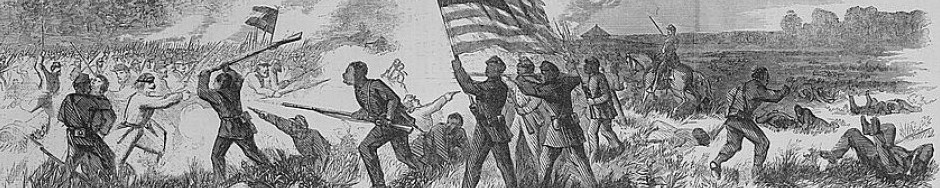
Samuel Brooks was one of the men from the 1st Arkansas (later renamed the 46th U.S. Colored Infantry) captured at Mound plantation in late June 1863. Companies E and G were posted high on an Indian mound, and were overtaken by Confederate forces under the command of Col. William H. Parsons, who were soon reinforced by Brig. Gen. James C. Tappan’s brigade. Hopelessly outnumbered, the Federals were forced to surrender. This was a risky proposition. Rumors had already circulated that the Confederates refused to take prisoners at Milliken’s Bend earlier in the month, and there was no reason to think they might not do the same here. (These rumors were mostly false, though no one knew it at the time.)
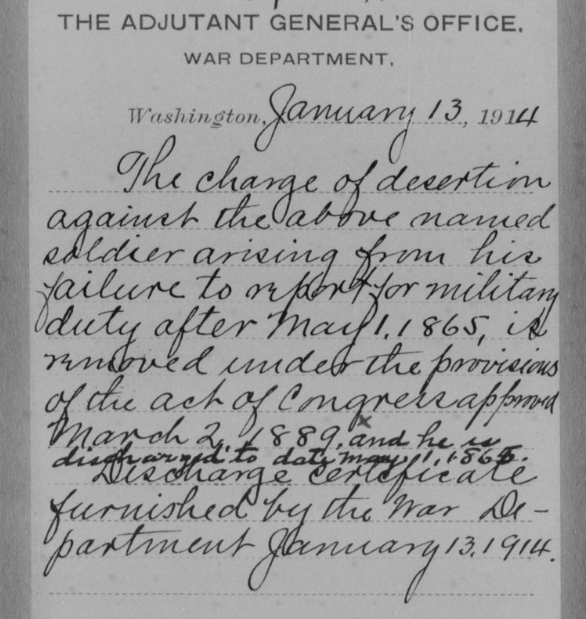
What happened next to Brooks is revealed in a Congressional document from 1872. Two former Confederate officers claimed that after his capture, Brooks had been held at Monroe, then moved to Shreveport, Louisiana, where he was taken by other Confederate authorities to work for the government. Brooks himself stated that he had been forced to labor “under guard” in a rope factory in Shreveport. When the war ended, he went to Caldwell Parish, where he found work at his former captor, Confederate captain Faulkner’s plantation. Brooks said he never had an opportunity to rejoin his regiment – which would be true, since the 46th USCI finished the war in Texas and were mustered out in Little Rock, Arkansas. Their locations would have been unknown to Brooks. The Army, however, cited his failure to return to his regiment – which remained in service until 1866 – as desertion. Although both Faulkner and his subordinate Lt. John S. Flintt, both white men and former Confederates, testified on Brooks’ behalf, the Federal authorities after the war were still not convinced.
Brooks’ service record reveals that he had never even been paid, not once – and was still due $150 when his regiment mustered out in 1866. But another note states he was dishonorably discharged, with no further explanation provided, and thereby forfeiting all the pay due him. Apparently it would take until 1914 – 50 years after the war – before Brooks had his good name restored to him by the military bureaucracy of the United States. By this time, he was more than 70 years old.
Comments
Samuel Brooks, USCT Veteran and POW — No Comments
HTML tags allowed in your comment: <a href="" title=""> <abbr title=""> <acronym title=""> <b> <blockquote cite=""> <cite> <code> <del datetime=""> <em> <i> <q cite=""> <s> <strike> <strong>