History is Lunch – Two Mississippi Museums
Weds. June 18 – Jackson, Mississippi and livestream
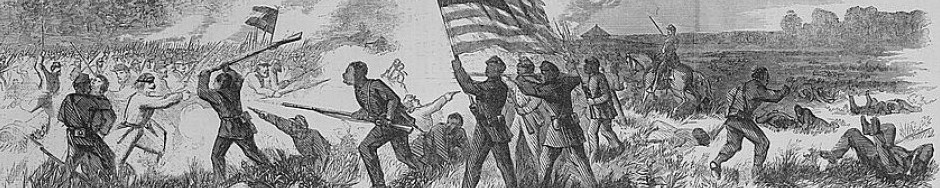
Excited to be speaking at the Two Mississippi Museums! I will be presenting: “Milliken’s Bend: Fighting for Black Freedom in the Civil War,” with book sale and signing to follow. Hope to see you there! If you can’t make it, tune in live through the MDAH Facebook page or watch on their YouTube channel. See you soon!
I really enjoyed the presentation yesterday. I learned a lot about Millliken’s Bend that I did not know. I recently found a denied Civil War pension for my great-great grandfather and some of the information helped me figure out why it could have been denied.
I appreciate your passion for history and placing the events into context.
Mr. Johnson – Thank you so much for attending and thank you for these comments. I really enjoyed speaking there and the audience asked so many good questions! I’m glad you enjoyed my talk.
I have not done as much detailed pension research as I would like, but for the ones I have looked at, it does seem that African American soldiers, particularly from the South and formerly enslaved, had an extraordinarily difficult time in obtaining pensions. Some of them, at least. I’ve done no comprehensive study of it, but I suspect part of it is because they often were known by several different names during their lifetime, especially in the decades leading up to and following the Civil War. They may have been known by one name on one plantation; been given a different name when sold to another slaveholder; took a name of their own choosing at their time of enlistment (or had a name “assigned” to them by the recruiter); and taken yet another name of their own choosing after the war. Part of the reason there is the photograph of John Gordon, that I used at the end of my talk, is because he was having to “prove” his identity. The pension examiner asked some of Gordon’s fellow soldiers if they recognized him by showing them his photograph. (And of course, he was a teenager at the time of the war, so that adds another layer to all of this).
Sometimes, (this is my belief anyway) – the government red tape that was an inherent part of the pension application process – was layered on double for Black veterans. They were asked to “prove” their birth or their marriage (in the case of widow’s pensions) – in a time where their ages were often only approximate, and marriages during enslavement were not recorded or recognized by law or by the slaveholder. They faced so many obstacles!
One book you are probably already aware of is: Voices of Emancipation, which focuses on the pension records of USCTs.
Thanks for your comment Mrs. Barnickel. Everything that you stated is what I’m discovering in the pension. He had a different last name pre- Civil War and it changed after. He has multiple spelling of his name also. There was one document that mentioned Milliken’s Bend but his enlistment date was after the battle. In some documents it had July 8, 1863 and others July 15, 1863.
Thanks for the book suggestion. I’m not familiar with that book but I will definitely check it out.
One historian termed the voter registration process in Louisiana in the 1950s and 1960s for African-Americans as “fiendishly difficult.” I often think the same term could be applied, imposed with similar motivations by whites in power, to the pension application process for USCT veterans and their families. I will suggest, if you haven’t already, to request the “complete” pension file for your ancestor, not just the “pension documents packet” that is offered by NARA. Yes, that “complete” packet is going to be quite expensive – but especially in the case of denied claims, may hold a wealth of incredible detail and testimony from friends and other family members who were desperately trying to advocate for their loved one’s service and the pension due him (or his heirs). Sometimes you will get actual names of the soldier’s parents, the places where he and his family members were held in bondage, and for how long, the treatment and types of work he performed while enslaved, of course, residences and family post-war and so on. Another complicating factor in some of these men’s pensions – rather, in widow’s pensions in particular – is that a man may have been married “according to slave custom” (whether or not by the couple’s own choice) before the war, while enslaved. Then during freedom one or both of them may have of their own choice decided to take a new spouse. Then you can have competing or complicated claims by two (or more) different women, claiming to be the soldier’s widow. Then the pension examiner has to (of course) ask more questions and make a determination as to which woman has the right to the claim. Oh, it was a mess! Another really great book about the women’s side of things is Freedom’s Women by Noralee Frankl. It is also very good!